Before you call anyone (us included) about a stain on your driveway, paver patio, or pool deck, it helps to know what's realistic. Some stains lift completely. Some leave a ghost. A few are permanent no matter who shows up. This is the honest version of what pressure washing can and can't do to a stained surface.
Why stains are different from dirt
Regular grime, algae, and mildew sit on top of a surface. Hot water, pressure, and the right detergent wash them off and the surface underneath looks new again. Stains are different. A stain has soaked into the pores of the concrete or paver, often to a depth of a few millimeters. Surface cleaning only gets the top layer. To lift a true stain, you need a chemistry that pulls the contaminant back out of the pore, a dwell time long enough to let it work, and sometimes more than one pass.
That's why a driveway can look perfectly clean except for one dark spot where the truck leaked oil last summer. The surrounding concrete was never stained in the first place. The spot is, and clean water won't fix that.
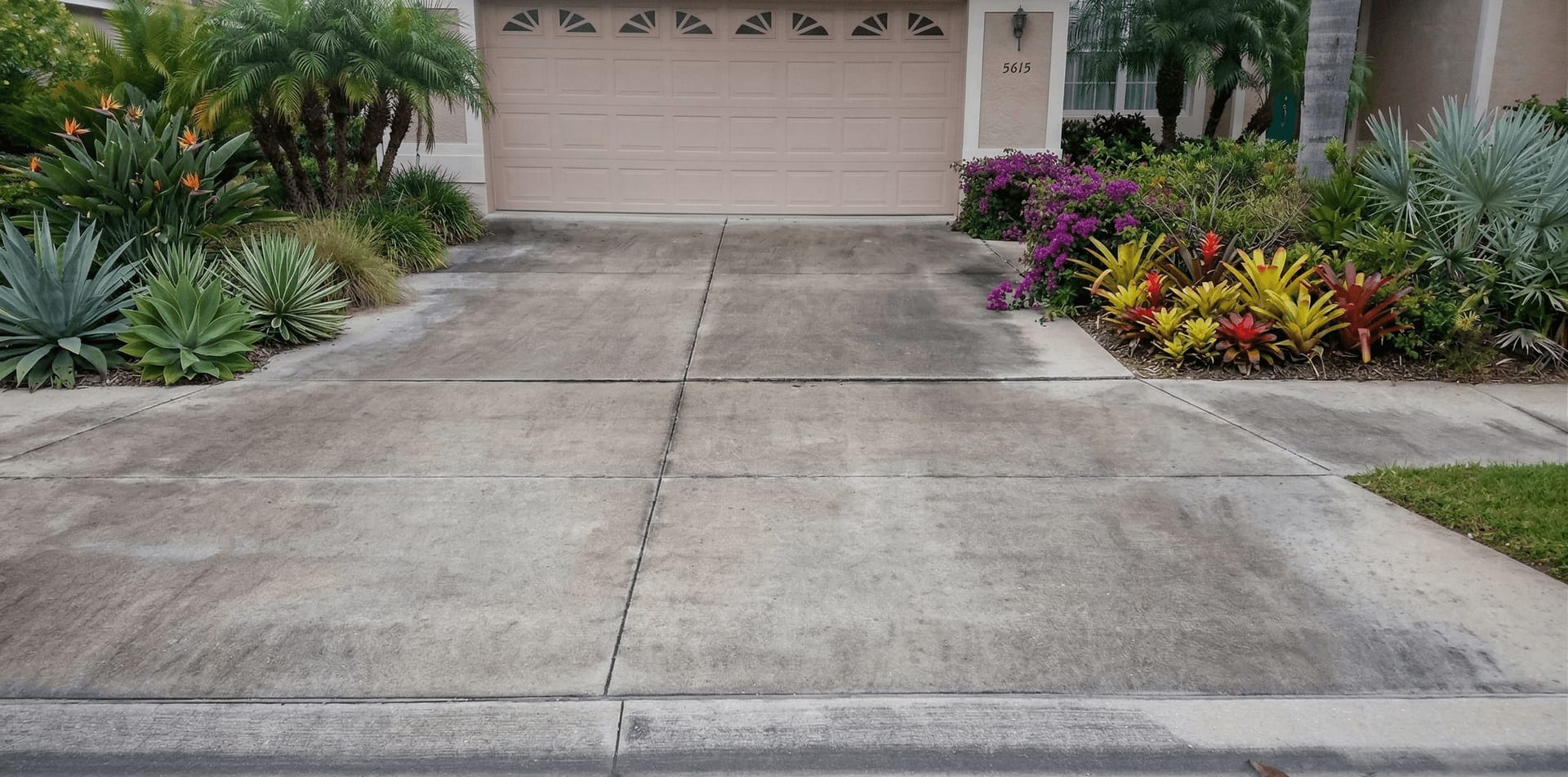
The four stains we see most
1. Oil & grease
Motor oil, transmission fluid, hydraulic leaks, cooking grease from a grill drip pan. These all behave the same way: they soak into porous concrete and paver surfaces and resist plain water completely. On a fresh spill (within 24 to 48 hours), a degreaser plus a quick pressure wash usually removes most of it. On an old spill (weeks or months), we use a poultice-style approach: apply a strong degreaser, let it dwell, agitate, rinse, and repeat until the pull-out stops darkening. Most oil stains come out 80 to 95 percent. A faint shadow can persist on a deep stain, especially on older concrete.
2. Rust
Rust comes from outdoor furniture feet, cast-iron planters, fertilizer with iron content, irrigation water high in iron, and construction rebar working its way out of a slab. Rust is not a dirt stain, it's a chemical one, and it won't respond to normal detergent. We treat rust with an oxalic-acid-based remover that converts the iron oxide into a water-soluble form so it can be rinsed away. Results are usually dramatic on light-to-medium rust. Deep stains (years old, or from an active leaching source) may need multiple treatments, and there's always a chance the surface is etched underneath the stain.
3. Tire marks & rubber scuff
Black tire marks on a driveway or in a garage are a blend of rubber and the plasticizers that kept the tire flexible. Heat from the pavement softens the compound and it transfers. A citrus-based solvent cleaner plus agitation and heat handles most tire marks cleanly. Fresh marks lift easily. Deeply baked-in marks on a white concrete driveway can leave a faint yellow tint after the black is gone. That tint is usually permanent.
4. Battery acid, pool chemicals & fertilizer burn
These are the stains we're most cautious about. Battery acid etches concrete. Chlorine tablets left sitting on a pool deck eat the surface. Spilled fertilizer bleaches it. In all three cases, the damage often goes below the stain itself, so removing the discoloration reveals an etched or pitted patch that will never match the surrounding surface. We can clean the stain. We can't reverse physical damage to the aggregate. It's important to know the difference going in.
What "clean" realistically looks like
On most jobs, the result you'll see is a surface that's visually uniform from ten feet away. Up close, under direct sun, older stains sometimes leave a faint ghost, a slight color difference that tells you something used to be there. This is normal. Concrete is porous, pavers absorb pigment, and some contaminants penetrate further than any surface treatment can reach.
We'd rather tell you that up front than have you feel disappointed at the end. If a stain is stubborn, we'll show you what we got out, explain what's still there and why, and leave the decision to you about whether to try a second pass.
Fresher is always better. A stain cleaned in the first week comes out almost completely. The same stain six months later might be 80 percent. Two years later, it might be 60 percent. Time is the variable you can't negotiate with.
Things you can do right now (before we get there)
- Blot, don't scrub. A fresh oil spill should be covered with kitty litter, sawdust, or cornstarch to absorb what's on top. Let it sit overnight, sweep it up, and then we can take on whatever's soaked in.
- Keep water off a rust stain. Rinsing it just spreads the iron. Leave it dry until we can treat it properly.
- Move the source. If a planter, a grill, or a bike is creating the stain, move it before we arrive. Otherwise it'll be back within weeks.
- Take a photo. A quick picture sent via text helps us estimate accurately and bring the right products on the first visit.
Things to avoid (seriously)
Muriatic acid on concrete is the single biggest mistake homeowners make. It's sold cheaply at big-box stores, advertised as a stain remover, and it will absolutely strip the surface. It also etches, lightens, and pits concrete in a way that's permanent. Whatever stain you had will now sit on a damaged patch that looks worse than the stain did.
- Wire brushes on pavers. The brush scratches a pattern into the surface that catches dirt forever after. Nylon bristles only.
- Bleach on rust. Straight bleach makes rust worse, not better. The chemistry is completely different from the stain removers we use.
- Maximum-pressure spraying over a stain. High pressure point-blank can cut a hole in the surface, leaving you with a stain plus a divot. Pressure is a tool, not a solution.
- DIY "mystery mixes." Combining household chemicals (especially ammonia and bleach) produces toxic gases. If you're not sure what something is, don't mix it with something else.
When it's worth calling a pro
If the stain is smaller than a dinner plate, fresh, and a single type (just oil, just rust), you can often handle it yourself with the right product and a bit of patience. Home improvement stores sell dedicated single-type removers that work fine when used as directed.
Call us when:
- The stain covers a large area or there are many of them
- You don't know what caused it
- You've already tried a remover and nothing happened
- The surface is near landscaping, a pool, or painted trim that needs protection
- You're preparing to seal pavers and want the surface as clean as it'll ever get first
A stain-removal add-on on a regular washing job is usually a small increment on top of the base rate. It's much cheaper than replacing the concrete or tearing out pavers.
Realistic disclaimers
We don't guarantee 100 percent stain removal because no honest company can. Every stain we treat has its own history: age, depth, surface condition, and prior attempts. What we do guarantee is that we'll use the correct chemistry for what you've got, apply it safely without damaging surrounding surfaces or landscaping, and tell you plainly what's going to come out, what's going to partially come out, and what isn't going to move.
If the result isn't what you hoped for, we'll walk the site with you and talk about options: a second pass, a different approach, or (in the case of severe etching) a recommendation to replace or resurface. No surprises.
Curious what chemicals we actually use? Read the chemicals guide →