Walk through any Fort Myers neighborhood and you'll see the evidence of someone who made the wrong call: streaky stucco, lifting roof granules, a screen enclosure with bent frames. In almost every case, the culprit isn't negligence. It's using a pressure washer when the job called for soft washing, or vice versa. They're two different tools, and knowing which one to reach for is half the job.
What is pressure washing?
Pressure washing delivers a high-PSI stream of water directly at the surface. The force of the water is what does the work — it physically blasts away dirt, grime, oil, algae, and buildup. A professional pressure washer can deliver anywhere from 1,500 to 4,000+ PSI depending on the machine and nozzle selected.
That kind of force is exactly what you want on hard, dense surfaces that can take it. Think of the things you'd have no problem scrubbing hard with a stiff brush. Pressure washing is just that, multiplied by a lot. Surfaces well-suited for it include:
- Concrete driveways and sidewalks
- Pool decks (concrete or travertine)
- Brick pavers before sealing
- Retaining walls and exposed aggregate
- Commercial concrete and warehouse floors
On these surfaces, high pressure strips away years of embedded grime quickly and effectively. You can see the results in real time: dark concrete turning light gray as the machine passes over it.
What is soft washing?
Soft washing uses very low pressure (roughly garden-hose pressure) combined with a cleaning solution. The typical mix includes sodium hypochlorite (a form of bleach), a surfactant to help it stick and penetrate, and sometimes a neutralizer depending on the situation. The chemical does the work, not the pressure.
This distinction matters more than most homeowners realize. When you blast mold or algae off a surface with high pressure, you're removing what's visible — but the organism's roots stay behind. Within a few weeks or months, it grows back. Soft washing kills the mold, mildew, and algae at the root, which is why soft wash results typically last four to six times longer than pressure washing the same surface.
Pressure washing is about force. Soft washing is about chemistry. You're not just cleaning what you can see — you're treating what's causing it.
What gets soft washed?
Soft washing is the right call for any surface that can't handle sustained high-pressure water, which covers more of your home than you'd expect:
- Roofs: shingles, tile, and metal all fall into this category. This is the big one.
- Stucco and painted exterior walls
- Vinyl and aluminum siding
- Wood fences and decks
- Screen enclosures and pool cages
- Soffit, fascia, and gutters (exterior brightening)
Each of these has something in common: they can be damaged, loosened, or degraded by high-pressure water. The soft wash process cleans them thoroughly without putting any physical stress on the material.
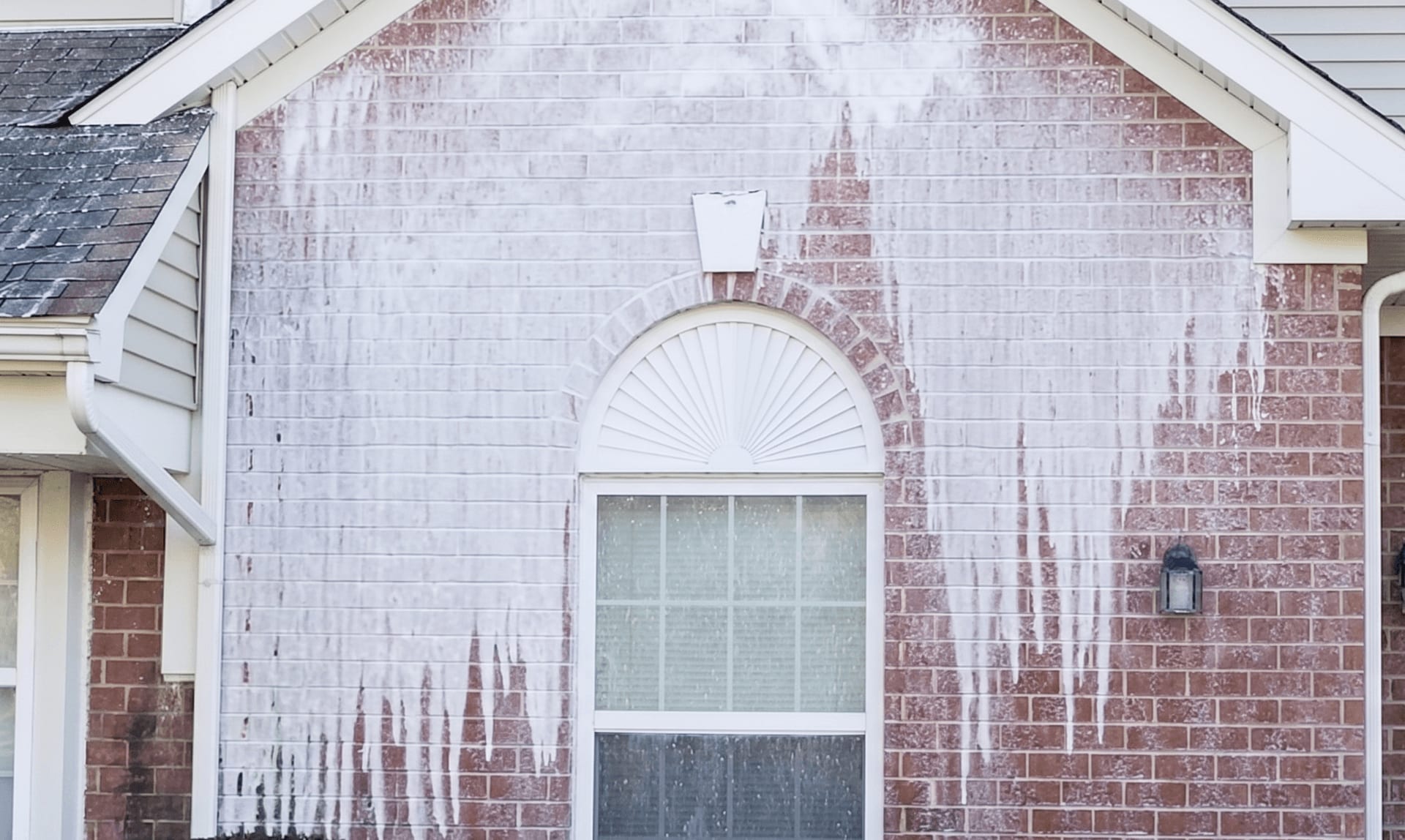
The rule of thumb
If you're ever unsure which method is right for a surface, there's a simple test: if you can scratch it with your fingernail, soft wash it. Roof shingles: soft wash. Stucco: soft wash. Wood: soft wash. Concrete driveway: pressure wash. Pool deck: pressure wash. It's not complicated once you internalize the principle.
Why this matters for homeowners
Every spring, homeowners across SWFL rent a pressure washer from Home Depot and go to town. For the driveway, great. For the roof, a potentially serious mistake.
Asphalt shingles are coated with granules that protect the underlying material from UV degradation, and those granules are not permanently fused to the shingle. High-pressure water strips them off. Once they're gone, the shingle's lifespan drops sharply — and depending on your warranty, you may have just voided it. A roof that had another 10 years of life in it suddenly has five, or three.
Stucco presents a different problem. Florida stucco is a layered system: the finish coat sits over a scratch coat, which sits over wire lath and the structure behind it. High-pressure water forces water into micro-cracks and behind the finish coat. That trapped moisture causes the stucco to delaminate, and eventually you're looking at bubbling, cracking, and repair bills that dwarf what the cleaning would have cost. Screen enclosures are another common victim — the aluminum frames dent and bend, and the mesh tears, both expensive to replace and easy to avoid with low pressure.
Neither method is better. They're tools.
It's worth saying plainly: pressure washing isn't better than soft washing, and soft washing isn't better than pressure washing. They're two tools designed for different jobs. A hammer is better than a screwdriver for driving a nail, but you wouldn't use it to hang a picture frame.
The skill is in knowing which one to reach for — a call made on the surface material, the type of contamination, the age and condition of the surface, and what the end result needs to look like. For most residential projects, a combination of both is used: pressure wash the hardscape, soft wash the structure. See how we approach pressure & soft washing in Fort Myers and Lee County.