Crystal-clear water is the goal, but "clear" isn't the whole story. You can have perfectly clear water with chemistry that's slowly destroying your equipment or irritating swimmers. This guide covers what healthy actually looks like — visually, chemically, and mechanically.
What you should be able to see
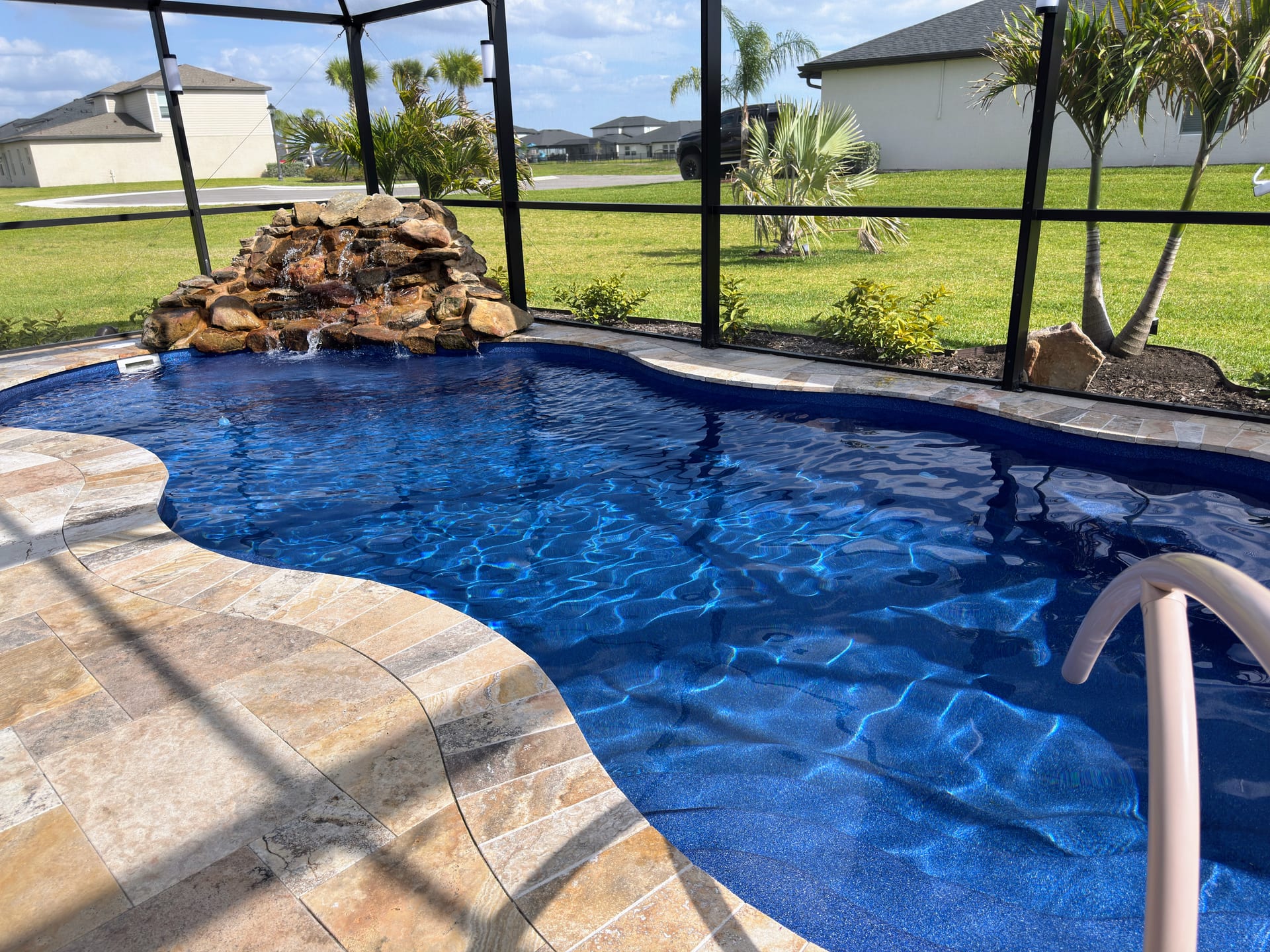
Start with the simplest check: stand at the edge of your pool and look at the drain at the bottom. In a standard 5-foot pool, you should be able to see it clearly — not as a vague shadow, but as a distinct shape. If you can't, something is off with chemistry, filtration, or both.
The water itself should read as blue-clear, not hazy, not cloudy white, not green-tinted. Any color shift is a signal. A slight green tint means algae is beginning to establish. Milky or white cloudiness usually points to chemistry imbalance or a struggling filter. Brown or tan discoloration often indicates metals or tannins in the water.
Look at the walls and steps too. They should look clean, with no slippery film, no dark streaks, no discoloration at the waterline. If the tile line has a noticeable calcium ring or the steps feel slick underfoot, you're looking at active problems even if the water appears clear from the surface.
The chemical ranges that matter
These are the numbers your pool needs to stay in to be genuinely healthy. Test strips give you a rough read; a proper liquid test kit or professional test gives you accurate numbers.
- Free chlorine — 1–3 ppm. The active sanitizer. Below 1 ppm means your pool isn't protected. Above 3 ppm can irritate eyes and skin.
- pH — 7.4–7.6. Low pH turns the water acidic and eats equipment and irritates skin. High pH makes chlorine largely ineffective even when the reading looks fine.
- Total alkalinity — 80–120 ppm. Acts as a buffer for pH. Keeps it from swinging wildly with each addition of chemicals or rain.
- Cyanuric acid (stabilizer) — 30–50 ppm. Protects chlorine from being burned off by UV. Florida's sun is aggressive. Without CYA, chlorine can dissipate within hours of dosing.
- Calcium hardness — 200–400 ppm. Too low and the water pulls calcium from plaster, grout, and equipment. Too high causes scaling and cloudy water.
- Salt (saltwater pools) — 2,700–3,400 ppm. The range your salt cell needs to generate chlorine efficiently. Too low and the cell can't produce; too high stresses the system.
Clear water isn't proof of a healthy pool. Chemistry that's off can look perfect and still be quietly wrecking your equipment — test the numbers, don't trust the sparkle.
Reading your pool's flow
Chemistry and clarity both depend on the water moving. A stagnant pool is a problem pool, no matter what the chemical readings say. The return jets — the fittings that push water back into the pool — should be noticeably active. Put your hand in front of one and you should feel definite flow. If they feel sluggish or barely moving, your pump or filter needs attention. A dirty filter is the most common cause; a pressure gauge above the manufacturer's recommended level is a clear sign it's time to backwash or clean.
Your skimmer should be pulling surface debris toward it. If leaves are floating motionless, if there's no visible draw near the skimmer opening, circulation is compromised. Check the skimmer basket first — a clogged basket restricts flow significantly and takes about thirty seconds to fix.
In Florida's heat, run the pump a minimum of 8 hours per day. In summer (June through September), 12 hours is the better target. The water needs to turn over completely at least once per day to stay clear and properly sanitized. Cutting pump time to save electricity is a false economy; the algae treatment bill is always bigger.
Warning signs something is wrong
Some problems announce themselves loudly. Others are quiet until they become expensive. Know what to watch for:
- Cloudy or hazy water: almost always a chemistry or filtration issue. Test first; add chemicals second.
- Green tint or green walls: algae bloom. Almost always caused by chlorine falling below 1 ppm, often combined with high CYA levels that have reduced chlorine's effectiveness.
- White or gray scaling on walls and tile: high calcium hardness or high pH. The scale is calcium carbonate and it bonds to surfaces over time.
- Strong chemical smell: a paradox that surprises most homeowners. That chlorine smell is actually chloramines, which form when free chlorine combines with nitrogen compounds from sweat and organic matter. It means you don't have enough free chlorine. Add more, not less.
- Foamy water: elevated phosphates, certain algaecides, or body care products can all cause foam. Worth testing for phosphates if it persists.
- Slippery walls or floor: biofilm or early-stage algae forming even if the water still looks clear. Don't wait for it to turn green before you act.
Weekly vs. monthly tasks
A healthy pool doesn't happen by accident. It happens because someone shows up consistently and does the same things every week.
Every week: test and adjust free chlorine, pH, and total alkalinity; skim the surface and empty the skimmer and pump baskets; brush the walls, steps, and any shaded areas (algae loves corners); vacuum the floor, or confirm your automatic cleaner is running; and check the pump is running and returns are flowing normally.
Every month: check filter pressure and backwash or clean if above threshold; test cyanuric acid and calcium hardness levels; inspect equipment for leaks, unusual sounds, or wear; and test salt levels if you have a saltwater system and check cell operation.
With weekly professional service, all of this happens automatically. You shouldn't have to think about it — you should just be able to jump in. That's the goal of our $100/month weekly pool service in Fort Myers and Lee County.
A well-maintained pool isn't complicated, but it does require consistency. Miss a week and chemistry drifts. Miss two weeks in a Florida summer and you may have an algae problem that takes multiple shock treatments and several days to clear. The math on regular maintenance vs. algae cleanup is not close. If your pool is already green or cloudy and you're not sure where to start, give us a call — we can get eyes on it, test the water, and tell you exactly what it needs.